Seven Sisters
August 14, and the end of the heat at last. A clear night, and the first proper chance to have another go at the Pleiades, now becoming visible in the early hours.

A much better result than the first effort back in March, when it was on the other side of the sky and I had a street light to deal with.
Imaging the Pleiades poses some problems. The main stars are very bright and the nebulosity is pretty faint. You have to balance exposure time and gain so that the stars don’t get blown out, while still capturing the nebulosity; here I used 30-second exposures with a lowish gain of 40. And a clear sky helps – any haze will cause the stars to bloom.
Details:
Target: The Pleiades (M 45)
Equipment: Dwarf Mini, Astro filter, perfect EQ
Time: 2026-08-15 02:35..04:16
Integration: 1hr 12mins (163×30secs, +5 failures), gain 40
Conditions: Clear, Bortle 6
Processing: PhotoDesk equalisation, gamma
I also had another shot at Comet 220P/McNaught. So here are three days overlaid, showing the movement (13th was Perseids, and 14th was cloudy):

And so to bed…
A Big Day!
August 12, a big day for astronomy here. A solar eclipse, a meteor shower, various galaxies, and first up, Comet 220P/McNaught. This is an overlay of the images taken on 11 and 12 August, showing how much the comet has moved in 25 hours:
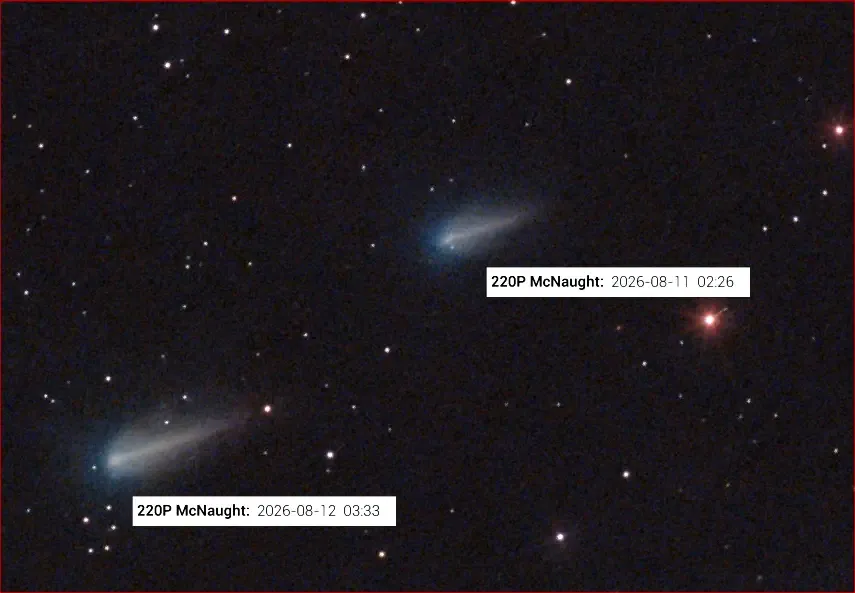
The times are of the first frame in each case. The comets themselves look a bit different because they had different exposures, gains and mounts (which meant one had to be rotated to align the stars).
Comet 220P/McNaught is periodic, and orbits between Mars and Jupiter every 5.5 years. It’s normally pretty faint at magnitude 17 (probably too faint for the Mini to image), but on 31 May and 5 August this year there were two outbursts when the comet was closest to the Sun. These increased the brightness by 8,000 times, to magnitude 7 or so.
And now, the partial solar eclipse. In Leeds this ran from 18:12 to 20:03, with the maximum coverage of 92% of the Sun at 19:09.
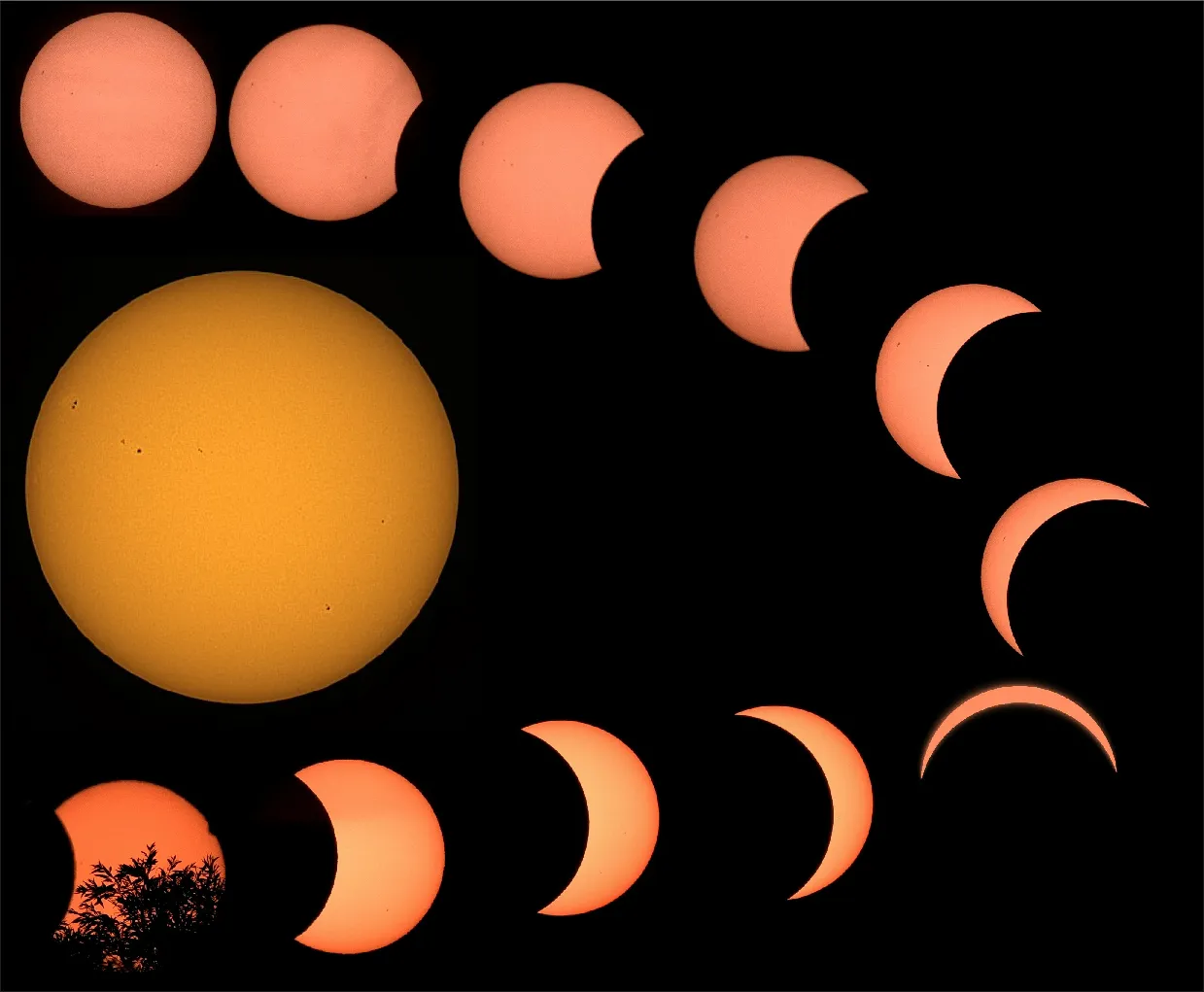
Here I’ve montaged a selection of the 430 pictures the Mini took, using its Burst mode of a photo every 15 seconds. As I couldn’t get off work I had to set the scope up on the roof of the library (with permission!) and set it running during my break.
The final montage image shows the Sun disappearing behind the roof garden of a local pub; I wasn’t able to get the last stages of the eclipse. The central image is a higher resolution picture of the Sun taken at quarter to six, just before the main shoot started. Sadly there are only a few small sunspots.
Here’s the video:
There were a couple of minor problems. The focus went a bit off at one point (probably due to the Mini running very hot at over 50°), but you can refocus during Burst mode so could be fixed; you can see this happening at about 8 seconds. And at about 19:15 I noticed that the Sun (still being eclipsed) was about to disappear behind a building, so I halted the shoot, moved the camera and restarted capturing. I only lost about 2 minutes, so not a disaster.
The video was built by ffmpeg from the 430 jpegs emitted by the Burst mode. Some images — only 4 — were badly tracked, so were replaced by adjacent photos. The whole sequence was then stabilised (using the incredibly capable ffmpeg again), and reduced to 800 pixels wide for displaying here.
Later was the maximum of the annual Perseids meteor shower. Here’s a star trails covering 4 hours from about 11:30:
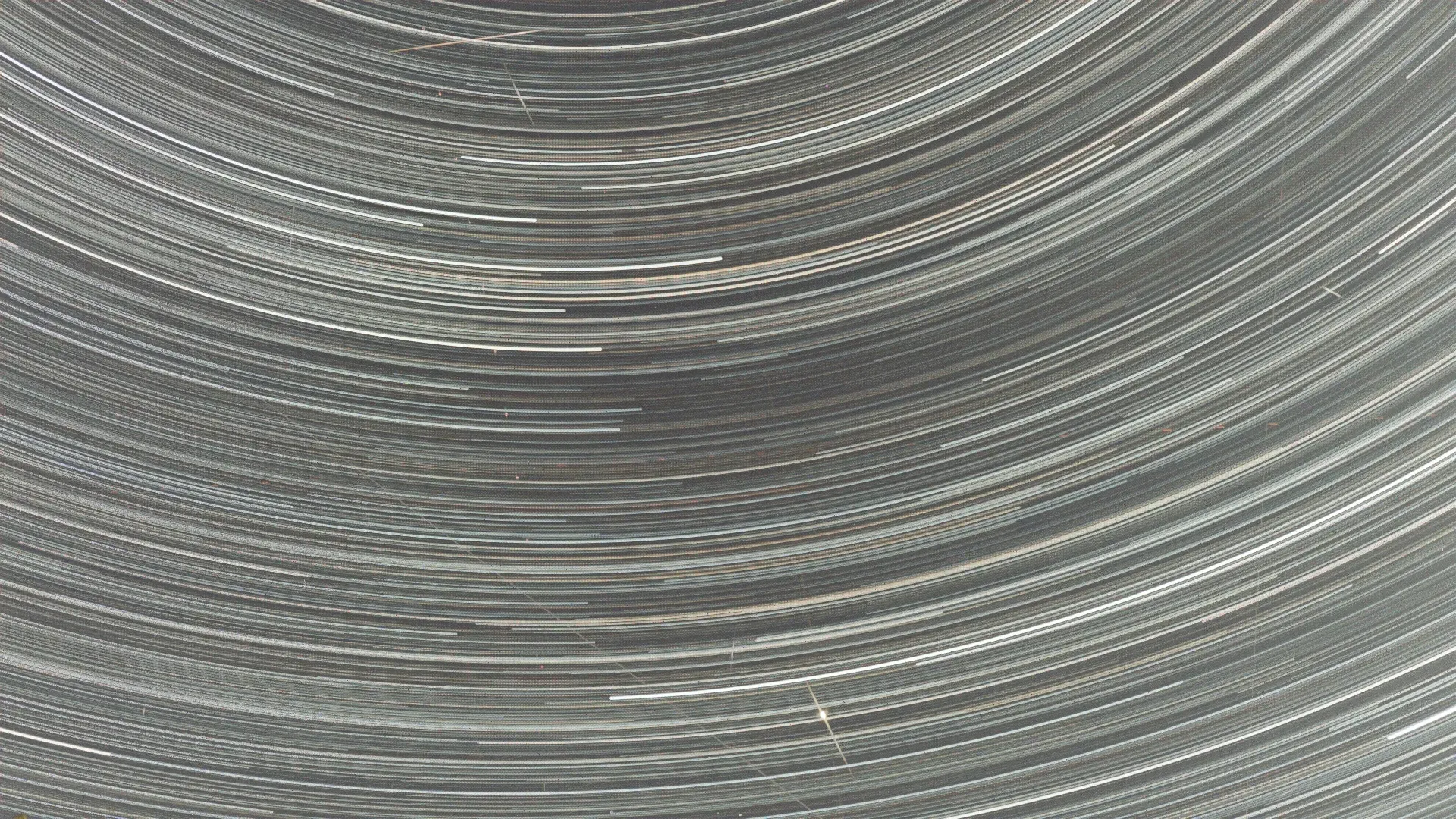
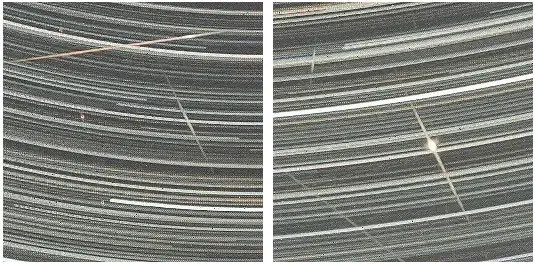
We caught a couple of Perseids, plus sporadics, aircraft and satellites. Here are a couple of close-ups of some of the meteors. The scope was pointing straight up.
You have to be lucky when photographing meteors. We did see a few more with naked-eye observation, but the camera wasn’t pointing at them. Oh well.
Galaxies next. I scheduled two shoots of the Triangulum Galaxy, one with the Astro filter and the other using the Duo Band filter to try to bring out the nebulosity. I then stacked them manually (not with the Mini’s Megastack facility) to get this:
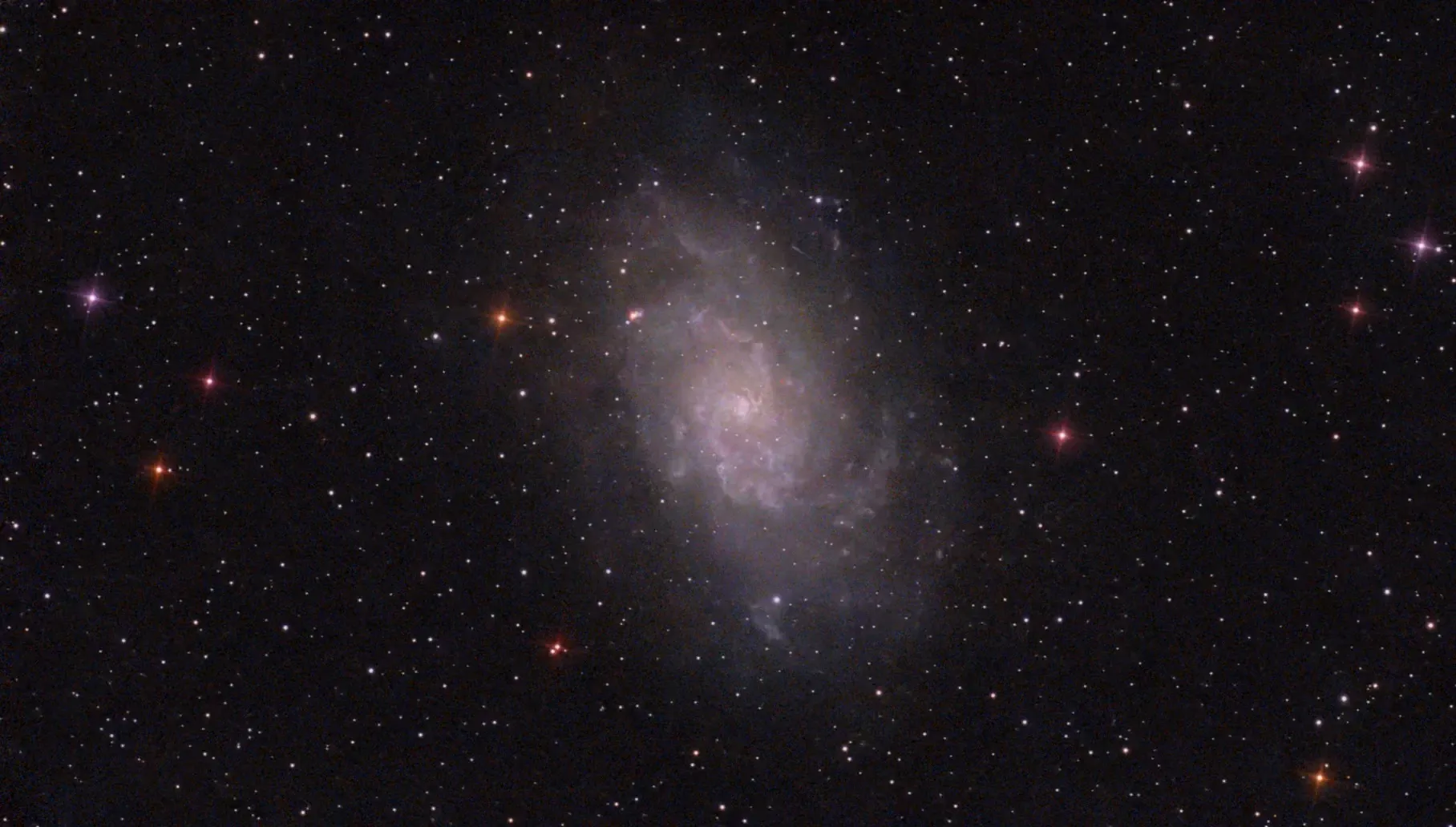
So a bit of an experiment. It clearly needs more exposures on the Duo Band, but it’s an improvement.
Details:
Target: Triangulum Galaxy (M 33, NGC 598)
Equipment: Dwarf Mini, Astro filter, 1% EQ
Time: 2026-08-12 00:39..02:01
Integration: 1hr 12mins (72×60secs, +4 failures), gain 70
Equipment: Dwarf Mini, Duo Band filter, 1% EQ
Time: 2026-08-12 02:09..03:20
Integration: 1hr 3mins (63×60secs, +3 failures), gain 70
Conditions: Clear, Bortle 6
Processing: PhotoDesk manual stack, equalisation, gamma
Finally, another addition to the megastack of M31, the Andromeda Galaxy:

Details continue to improve. The different colouration may be due to the Duo Band filter used on one of the stacks … actually I think I prefer the earlier effort.
Details:
Target: Andromeda Galaxy (M 31)
Equipment: Dwarf Mini, Astro filter, 1% EQ
Time: 2026-08-12 00:39..02:01
Integration: 1hr 33mins (93×60secs, +12 failures), gain 70
Megastacked with 4 other exposures
Conditions: Clear, Bortle 6
Processing: PhotoDesk equalisation, gamma
And so to bed…
Comet 220P/McNaught
August 10, and another comet. This is 220P/McNaught, a periodic comet which recently exploded and brightened enormously (see Aug 9 entry), from magnitude 17 up to 7 or so:
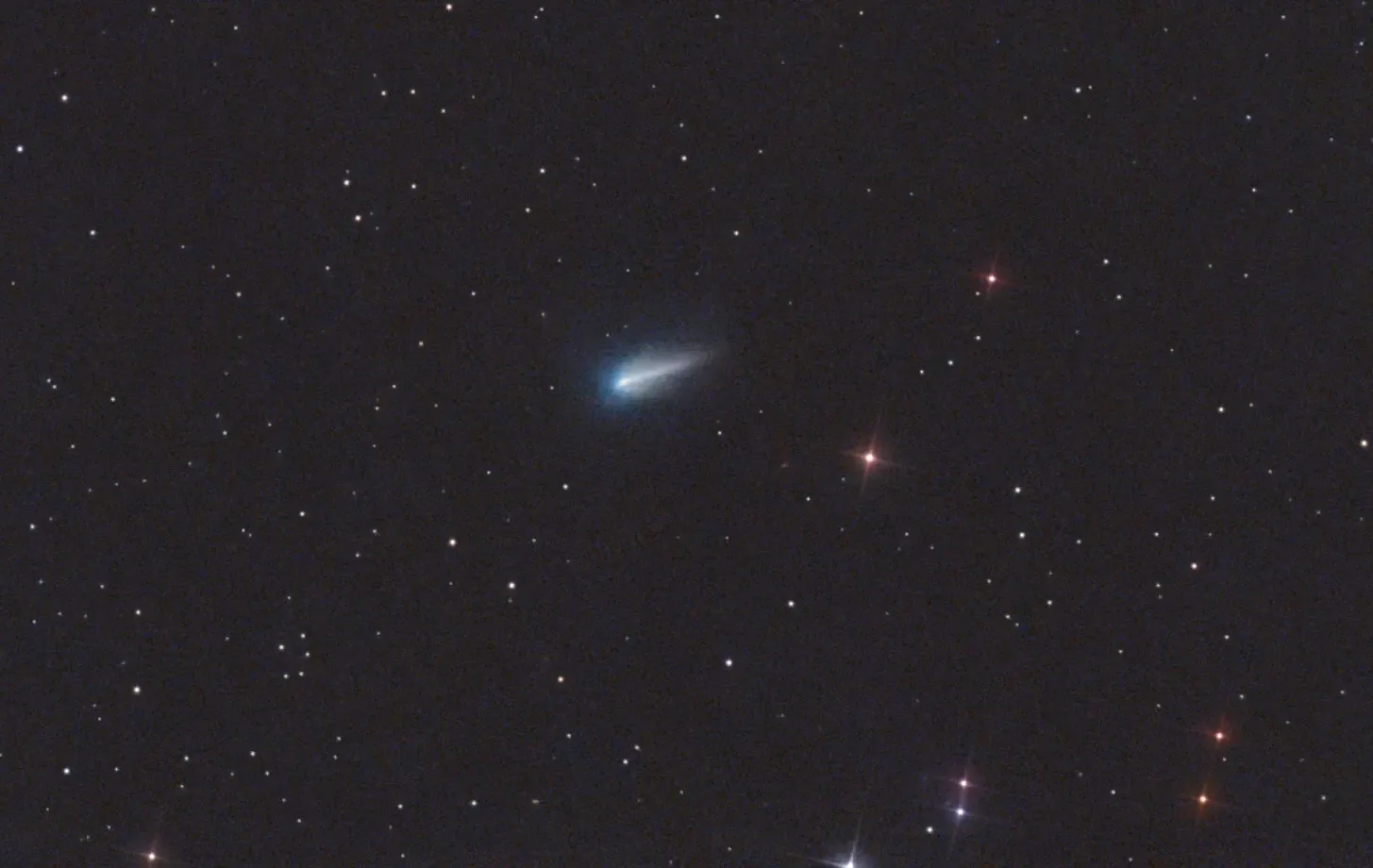
It’s quite distant so isn’t as good a target as C2025R3 back in April. But it’s higher in the sky.
Details:
Target: Comet 220P/McNaught
Equipment: Dwarf Mini, Astro filter, Alt-Az
Time: 2026-08-11 02:26..03:15
Integration: 37mins (150×15secs, +10 failures), gain 70
Conditions: Clear, Bortle 6
Processing: PhotoDesk equalisation, gamma, crop
And so to bed…
Triangulum Galaxy
August 8. Despite very poor conditions, here’s a first go at Messier 33, the Triangulum Galaxy:
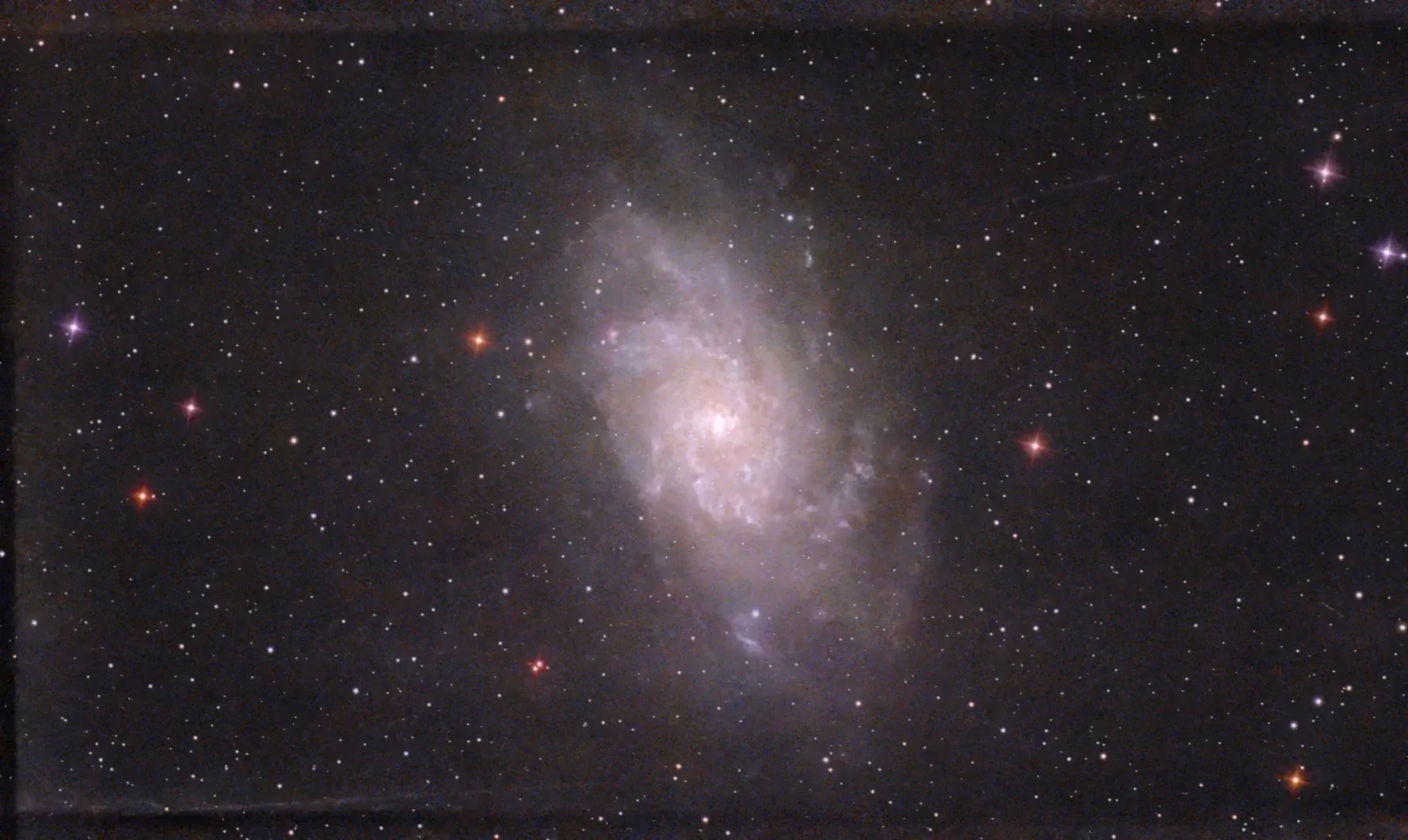
Clouds were constantly scudding across the sky and there was a lot of high haze, but there were enough gaps to let the Mini build an image; the edges of the image illustrate the problems. Using the Astro filter helps a lot with haze and thin cloud.
This galaxy in the Triangulum constellation is the third largest in the Local Group, behind Andromeda and our own. And despite the conditions, the pinkish colouration of the emission nebulae in the spiral arms is starting to become visible. So it’s a start.
Details:
Target: Triangulum Galaxy (M 33, NGC 598)
Equipment: Dwarf Mini, Astro filter, perfect EQ
Time: 2026-08-09 00:25..04:20
Integration: 3hrs 4mins (184×60secs, +28 failures), gain 70
Conditions: Poor (haze, clouds), Bortle 6
Processing: PhotoDesk equalisation, gamma
And so to bed…
Another Ghost, with Another Soul
August 7, and a clear night at last.
So here’s the Ghost Nebula IC 63 again. The previous attempt used the Duo-Band filter, but last night I used the Astro one. The last update to the Mini’s software allowed you to stack images with different filters, so this is the combination of both:
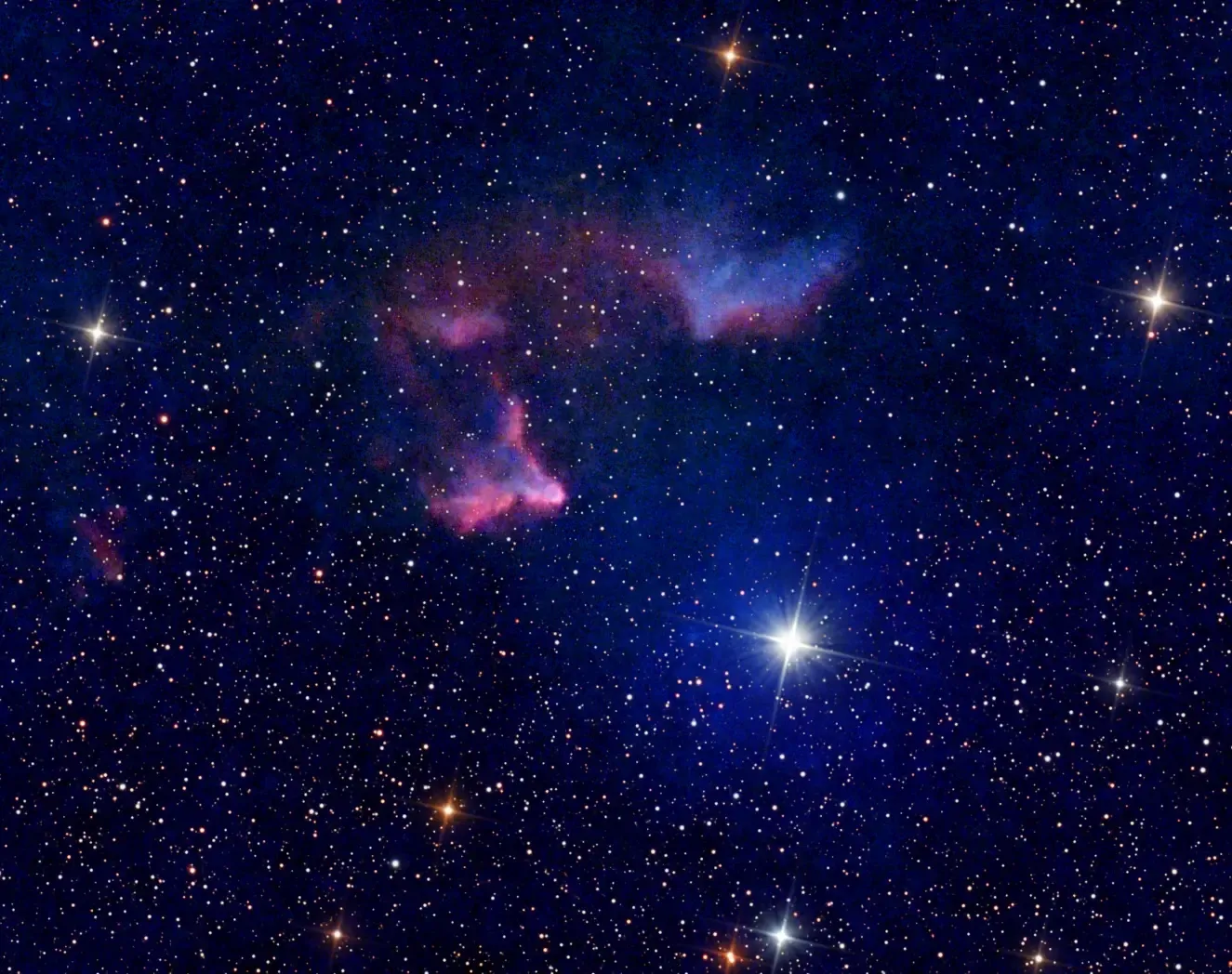
This has brought out the emission and reflection parts a bit better. But I’m still not happy with the processing.
Details:
Target: IC 63 (Ghost Nebula)
Equipment: Dwarf Mini, perfect EQ
Megastack:
1: Duo-Band filter
Time: 2026-07-30 22:47..01:28
Integration: 2hrs 19mins (139×60secs, +8 failures), gain 60
Conditions: Very clear, slight wind, Bortle 6
2: Astro filter
Time: 2026-08-07 22:22..01:28
Integration: 2hrs 35mins (155×60secs, +16 failures), gain 70
Conditions: Very clear, Bortle 6
Processing: PhotoDesk gamma, equalisation, crop
The previous attempt at the Soul Nebula was cut short by clouds, so I had another go and megastacked them:
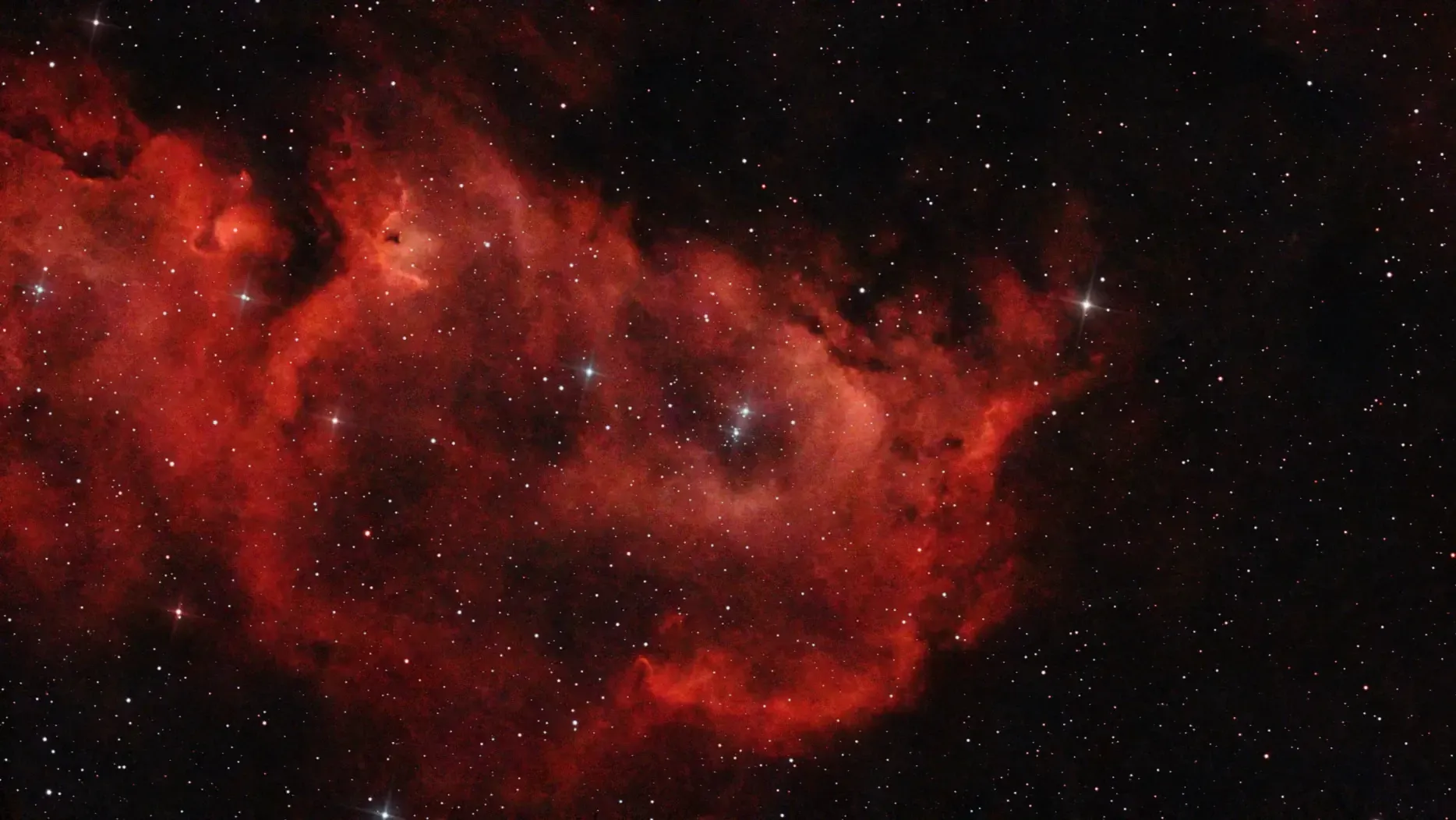
Details:
Target: Soul Nebula (Westerhout 5, Sh-2 199, LBN 667)
Equipment: Dwarf Mini, Duo-Band filter, perfect EQ
Megastack:
1: Time: 2026-07-18 01:10..03:30
Integration: 1hr 24mins (84×60secs, +45 failures), gain 60
Conditions: Hazy, then cloudy, Bortle 6
2: Time: 2026-08-08 01:40..03:59
Integration: 2hrs 7mins (127×60secs, 0 failures), gain 60
Processing: PhotoDesk equalisation, gamma
And so to bed…
A Ghost and a Bubble (again)
July 30. A nice clear night, so a couple of scheduled shoots.
First up is IC 63, aka the Ghost Nebula, in Cassiopeia:
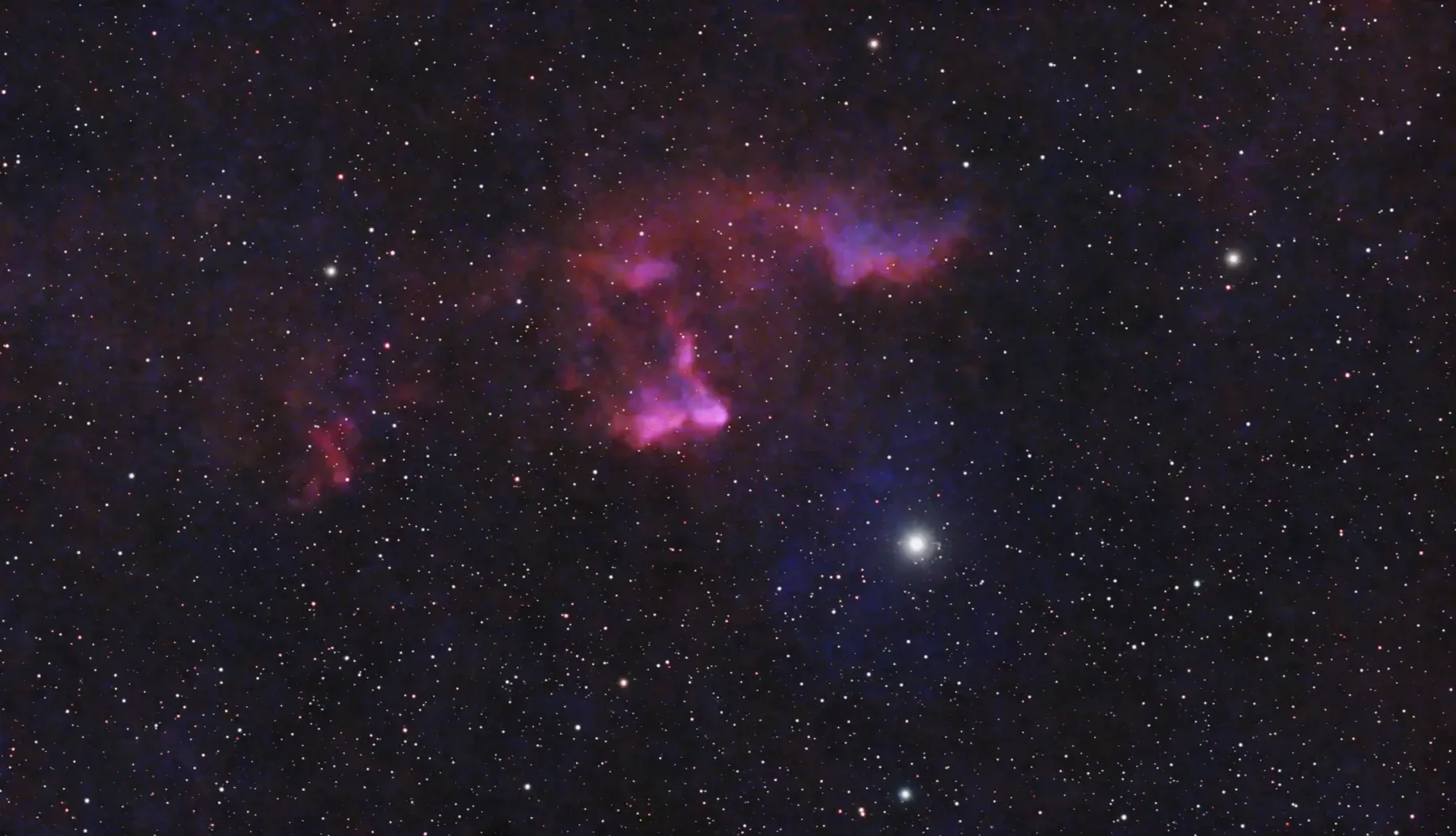
The bright star is Gamma Cassiopeia, the central star in the constellation’s distinctive W shape.
This image is a bit of an experiment. It’s a very faint nebula with both emission and reflection areas, so I’ve fiddled with the colour balance somewhat to try to bring out the bluish reflection areas. I also gaussian-blurred the nebulosity slightly, which reduces the noise a bit at the cost of resolution.
Details:
Target: IC 63 (Ghost Nebula)
Equipment: Dwarf Mini, Duo-Band filter, perfect EQ
Time: 2026-07-30 22:47..01:28
Integration: 2hrs 19mins (139×60secs, +8 failures), gain 60
Conditions: Very clear, slight wind, Bortle 6
Processing: PhotoDesk gamma, equalisation, colour balance, gaussian blur
Next was another go at the Bubble Nebula. This is a mega-stack of three different shoots:
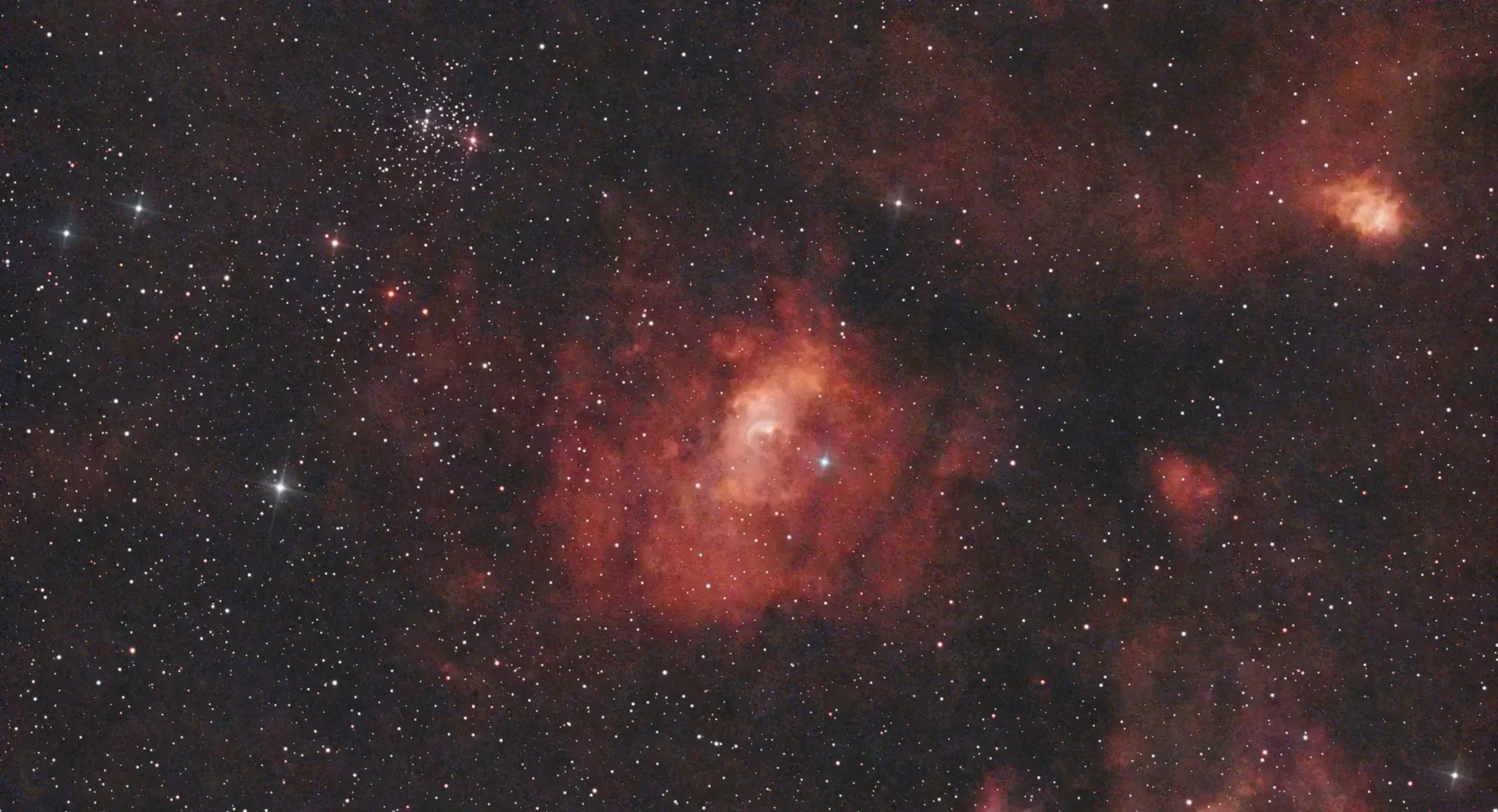
Compare with my previous attempt. Lots more detail in the surrounding nebula, but the Bubble itself remains elusive.
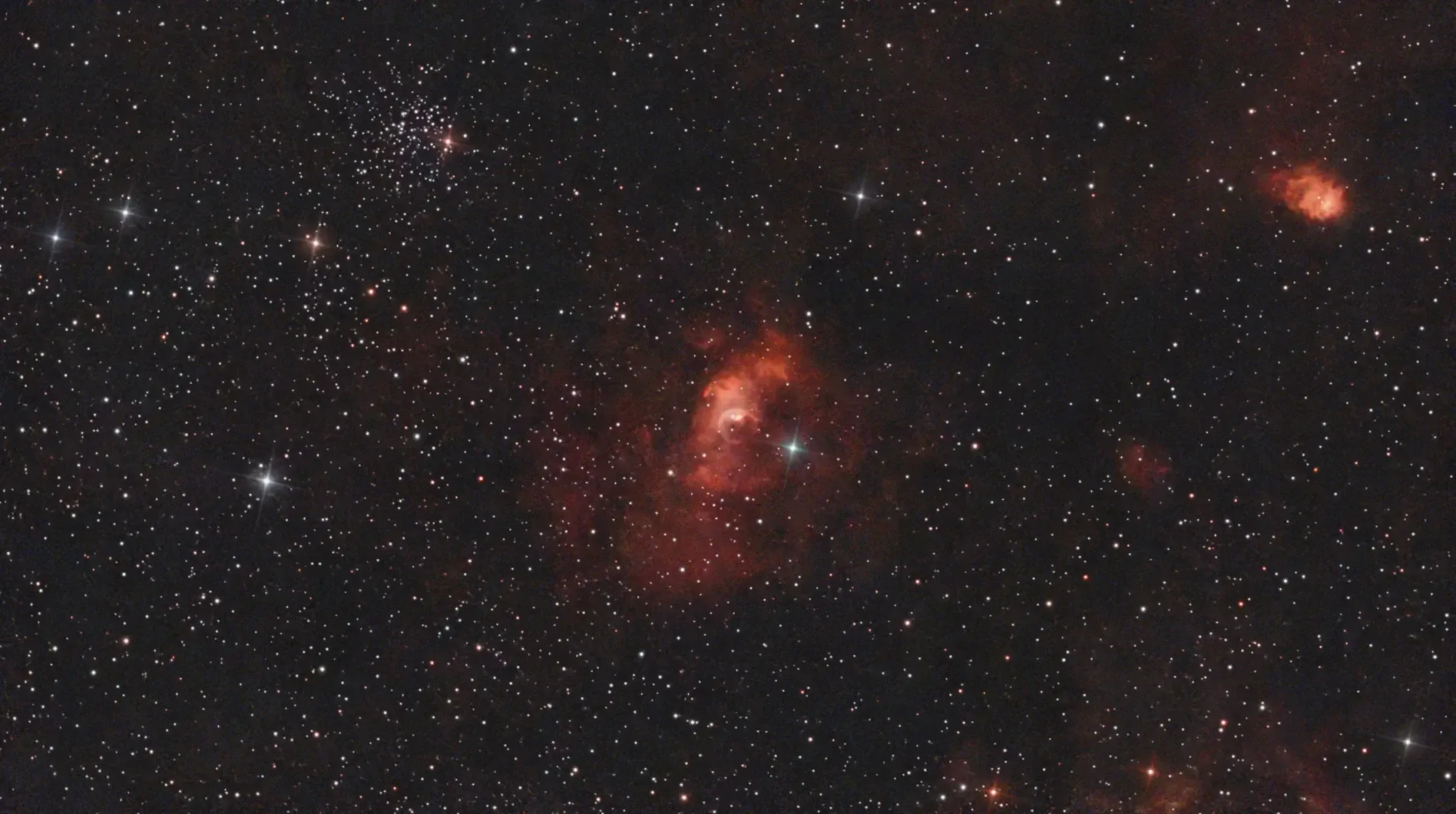
Details:
Target: C 11 (Bubble Nebula)
Equipment: Dwarf Mini, Duo-Band filter, perfect EQ
Mega-stack, 3 sessions:
Session 1: 2026-07-10 01:09..03:03; 1hr 37mins, 195×30secs, gain 60
Session 2: 2026-07-10 23:03..03:13; 3hrs 46mins, 226×60secs, gain 70
Session 3: 2026-07-30 01:38..04:19; 2hrs 19mins, 93×90secs, gain 80
Total integration: 7hrs 42mins
Conditions (3): Very clear, slight wind, Bortle 6
Processing: PhotoDesk gamma, equalisation
And so to bed…
A Coathanger
July 26. Here’s Brocchi’s Cluster in Vulpecula, the Fox. It’s also unsurprisingly called the Coathanger:
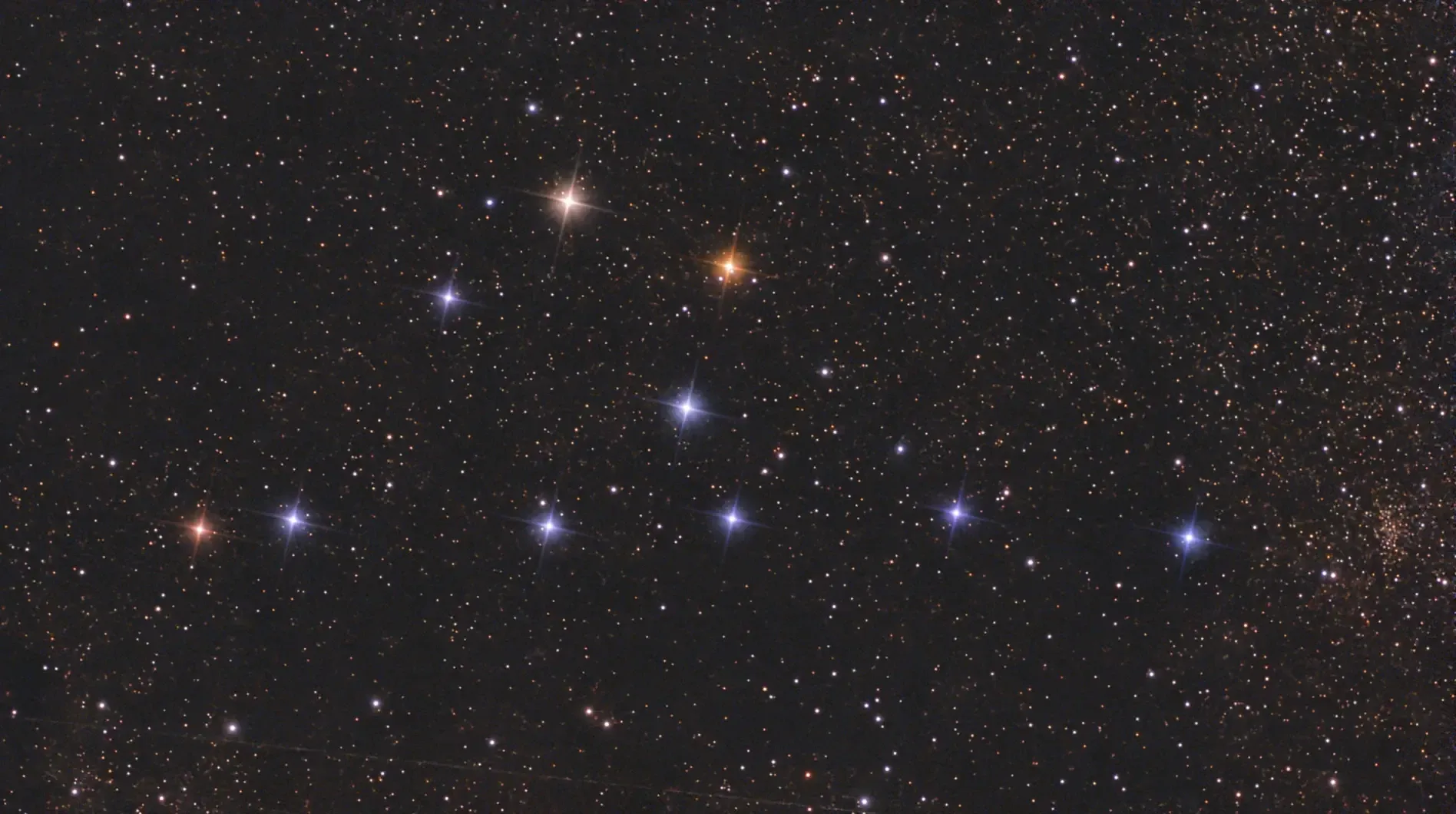
However, not all Clusters are actually clusters. A star cluster is defined as a group of gravitationally-bound stars with a common origin in a nebula of some kind. But the arrangement here is random; none of the stars making up the Coathanger are connected. It’s just a fortuitous arrangement of random stars, and is termed an asterism. Most constellations are also asterisms.
Details:
Target: HD 182919, the central star (asterism is the Coathanger, Cr 399, Brocchi’s Cluster, Al Sufi’s Cluster)
Time: 2026-07-26 22:42..23:52
Equipment: Dwarf Mini, Astro filter, perfect EQ
Integration: 50mins (101×30secs, +17 failures; all satellites), gain 60
Conditions: Occasional cloud, windy, Bortle 6
Processing: PhotoDesk rotation
And so to bed…
The Owl Cluster, with Star Spikes
July 24/25. A very hazy sky ahead of forecast rain (which never turned up), but it was clear enough to try a couple of small experiments.
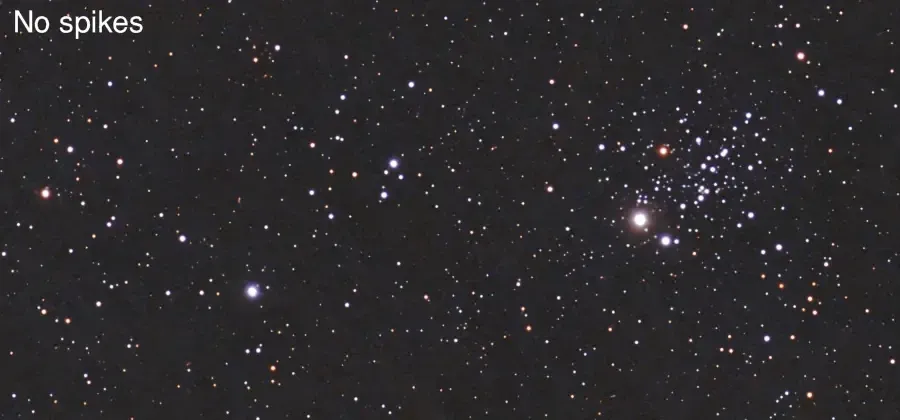
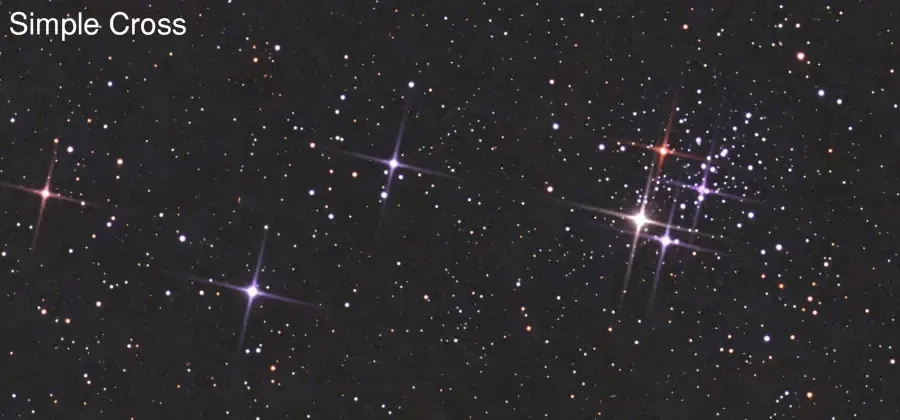
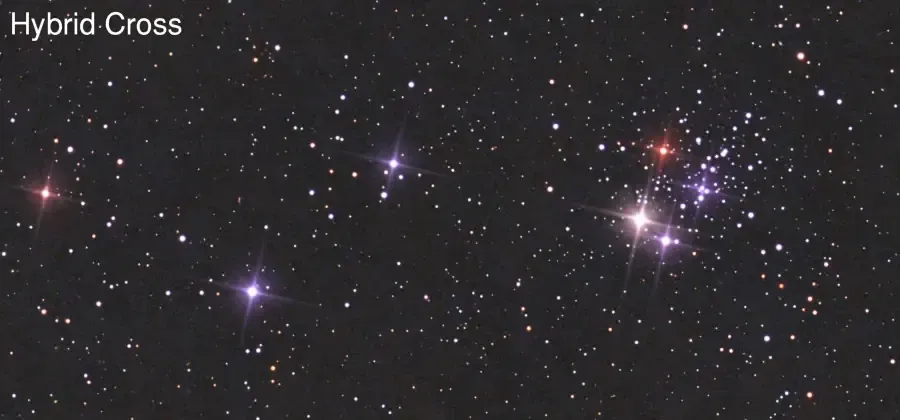
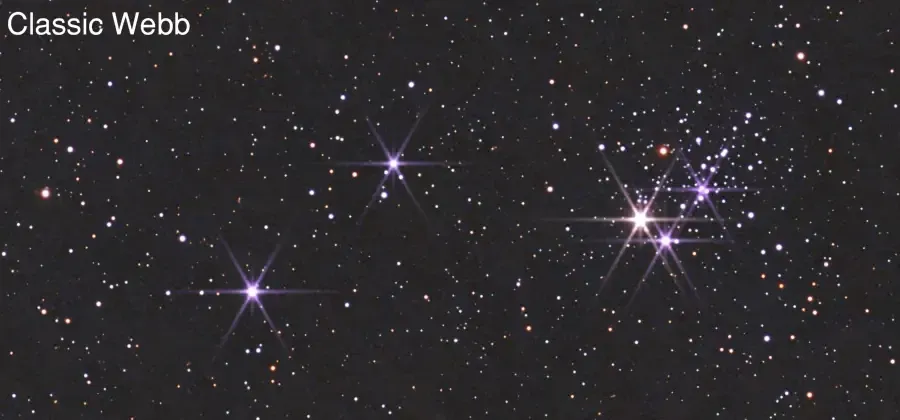
The Dwarf Mini manual hasn’t yet been updated to describe the “Star spikes” feature, so here’s what the various options do. The target is the Owl Cluster in Cassiopeia, and here it is with no spikes. It’s not a good image as the haze has smeared out the stars, but it’ll do for this demonstration. I used Stellar Studio’s “Auto” and “Star reduction” settings as the base for all these images; click one for a bigger version, and use the left/right arrows to cycle between them:
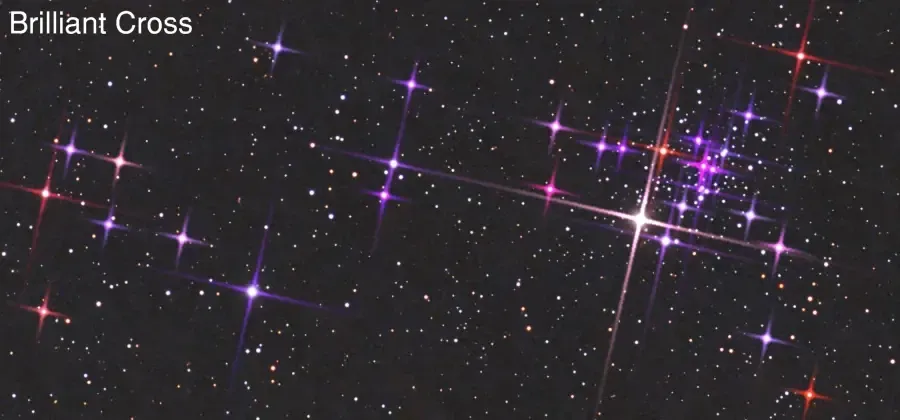
They really did go to town with that last one, didn’t they?
You’ll often see spikes around stars in astronomical images. They’re actually an artefact of the optical system being used, usually a telescope. Many scopes have internal secondary mirrors to redirect the light, and diffraction around the supporting struts gives rise to ’spikes’ around point sources of light. Most scopes have three or four struts, while the James Webb space telescope has six — hence the fourth image.
The Dwarf Mini doesn’t have a secondary mirror with supports so these spikes are ‘fake’, and added in software. But they can make a more pleasing and aesthetic image … if used in moderation. I think the Hybrid Cross is perhaps the nicest one.
It would be nice to have some control over the spikes: angle, number, extent, brightness triggering factor. Perhaps in a future update…
And so to bed…
A Heart and a Trunk
July 23/24. Another misleading forecast, with clouds allegedly all night. But it turned out clear, and as the nights are now getting longer I tried a mosaic of the Heart Nebula, which for a change does actually look like its moniker:
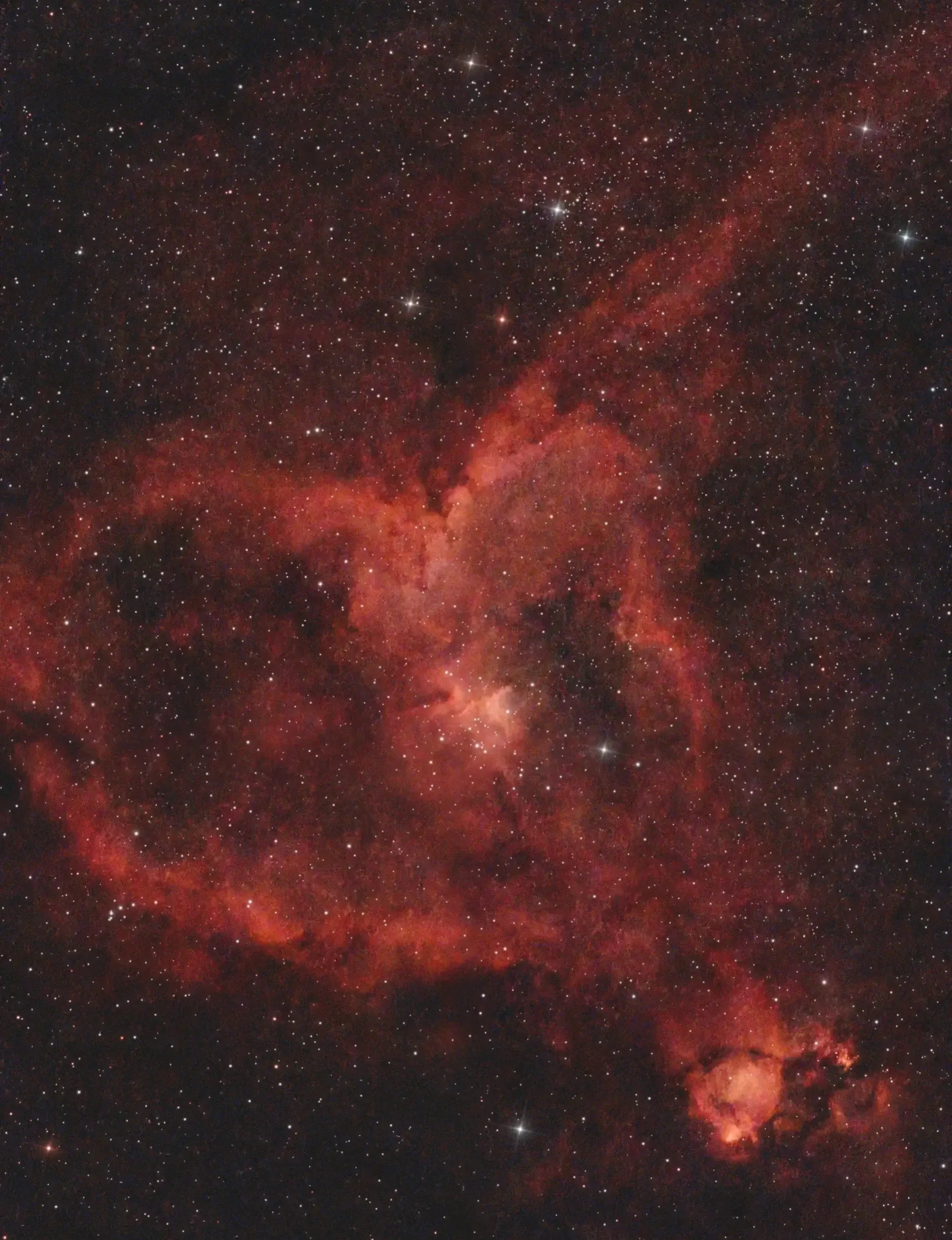
This is a large emission nebula in Cassiopeia, and is paired with the nearby Soul Nebula, off-screen at the top. It needed a mosaic to get it all in, and to get both in the same image will need 2 or 3 separate mosaics.
The bright area at the bottom is NGC 896, and the nebula’s reddish H-alpha emission is powered by radiation from the group of stars at its centre (IC 1805).
Details:
Target: Heart Nebula (IC 1805, Sh2-190, Valentine Nebula, Running Dog Nebula)
Time: 2026-07-24 01:10..04:06
Equipment: Dwarf Mini, Duo-Band filter, perfect EQ
Mosaic: 1.8×1.8, 40 images per tile
Integration: Total: 2hrs 35mins (155×60secs, +4 failures), gain 70
Conditions: Clear, Bortle 6
Processing: PhotoDesk equalisation, gamma, crop, rotation
While waiting for the Heart to appear, I had another go at the Elephant Trunk nebula:
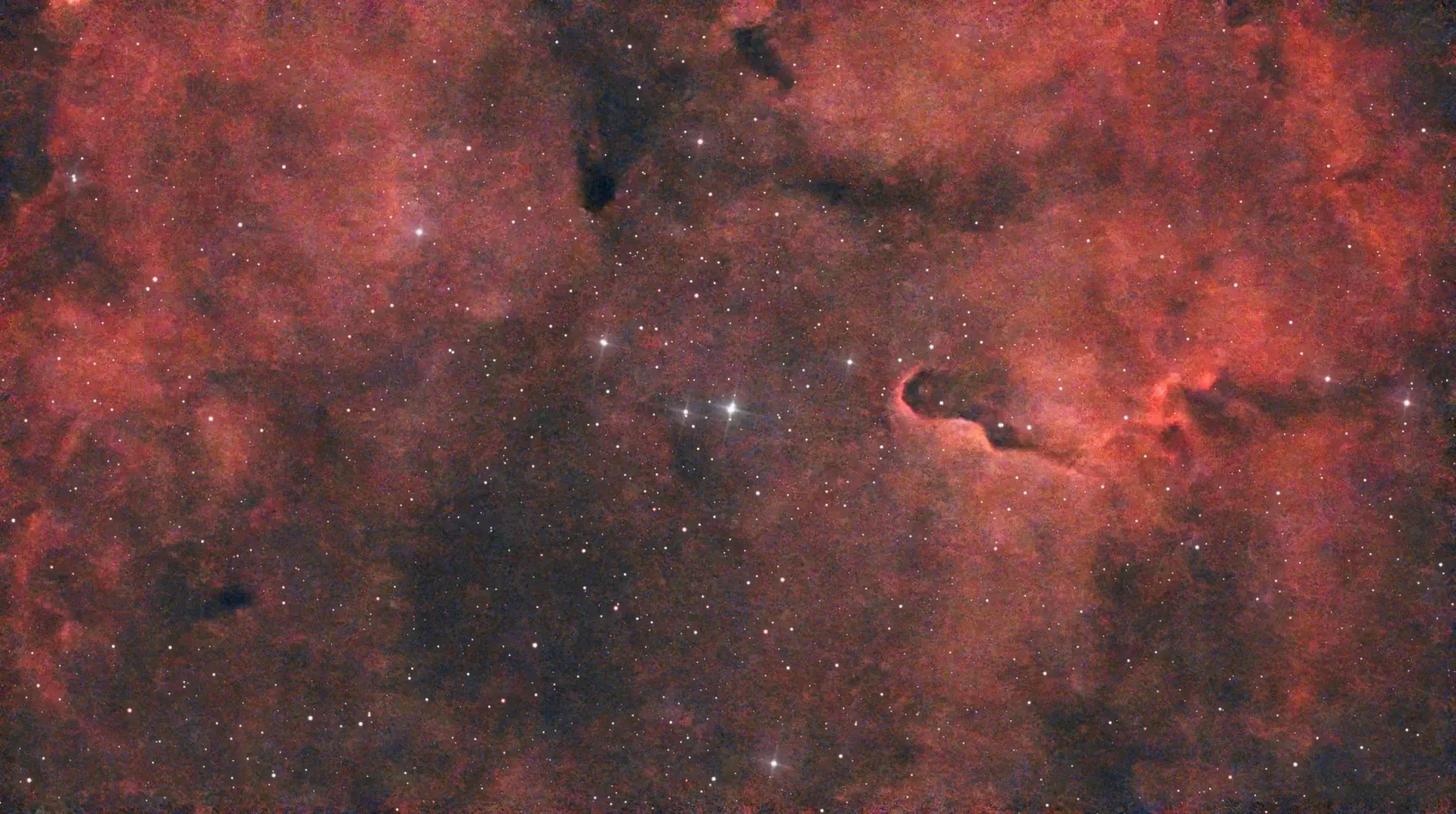
The “Trunk” (IC 1396A, or Sh2-131) is the curly dark dust lane on the right. It’s embedded in the large nebula known as IC 1396, which is being illuminated by the bright star in the middle of the image, HD 206267.
Off-screen at the top is Mu Cephei, or the Garnet Star. This red hypergiant is extremely large, about 762 times bigger than the sun — it would engulf both the Earth and Mars if it was in our system. A target for later.
Details:
Target: Elephant’s Trunk Nebula, IC 1396A
Time: 2026-07-23 23:04..00:58
Equipment: Dwarf Mini, Duo-Band filter
Integration: 1hr 45mins (105×60secs, no failures), gain 70
Conditions: Clear, Bortle 6
Processing: PhotoDesk equalisation, gamma
And so to bed…
A Teddy Bear
July 20/21. Despite forecast clouds for the night, it turned out to be fairly clear, if rather hazy. So this is a scheduled shoot of Sh2-171, known for some reason as the Teddy Bear Nebula:
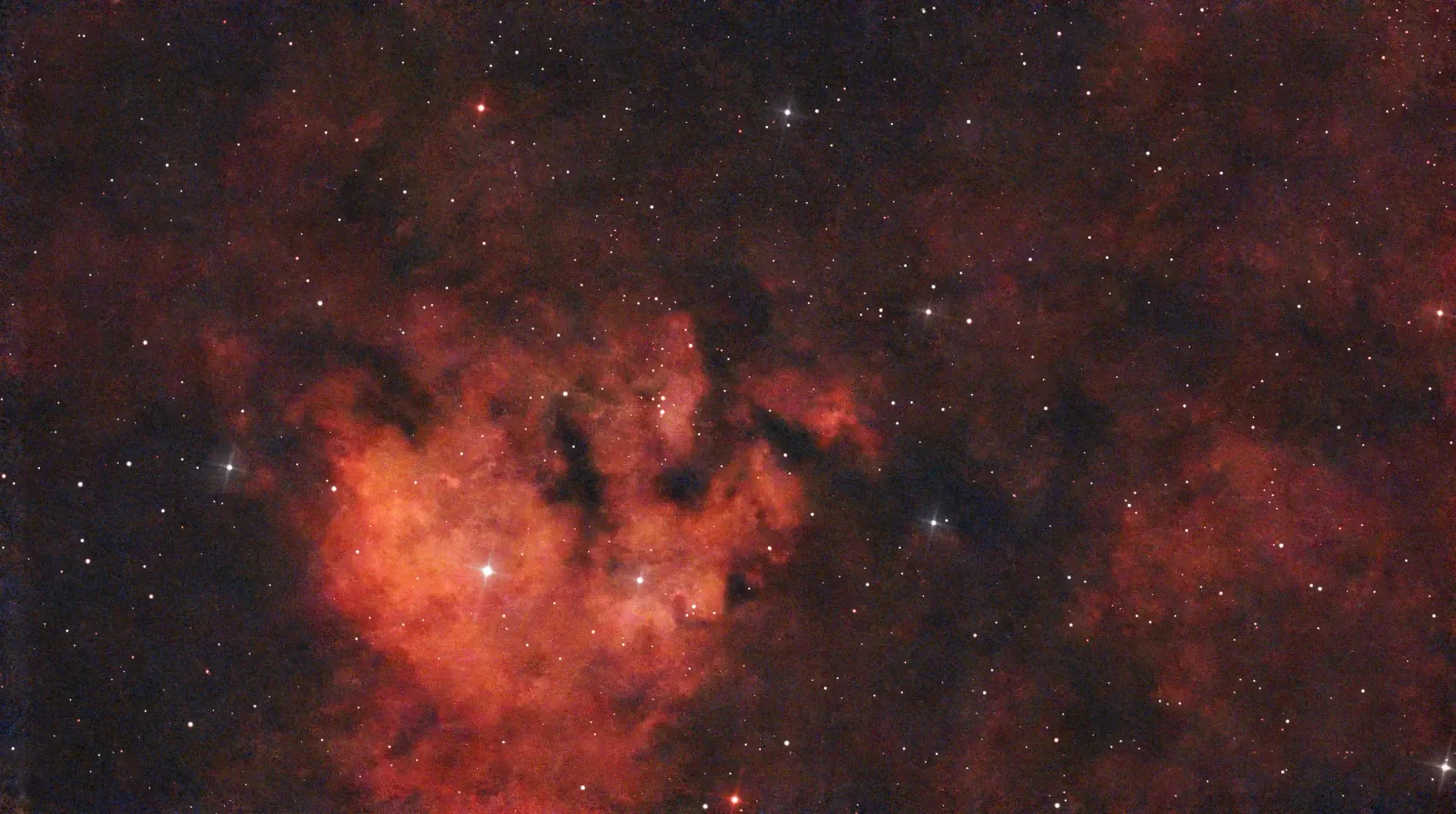
Apparently the two bright stars are Teddy’s eyes, alongside his ears and nose. And whatever they were smoking, I want some.
Teddy lives in Cepheus and is a small part of the much larger NGC 7822, aka the Question Mark Nebula. Which does actually look a bit like a question mark. It will need multiple mosaics to capture it all.
Details:
Target: Teddy Bear Nebula (Sh2-171)
Time: 2026-07-20 23:06..03:20
Equipment: Dwarf Mini, Duo-Band filter, perfect EQ
Integration: 3hrs 44mins (224×60secs, +6 failures), gain 60
Conditions: Clear but hazy, Bortle 6
Processing: PhotoDesk equalisation, gamma
And so to bed…