The Owl Cluster, with Star Spikes
July 24/25. A very hazy sky ahead of forecast rain (which never turned up), but it was clear enough to try a couple of small experiments.
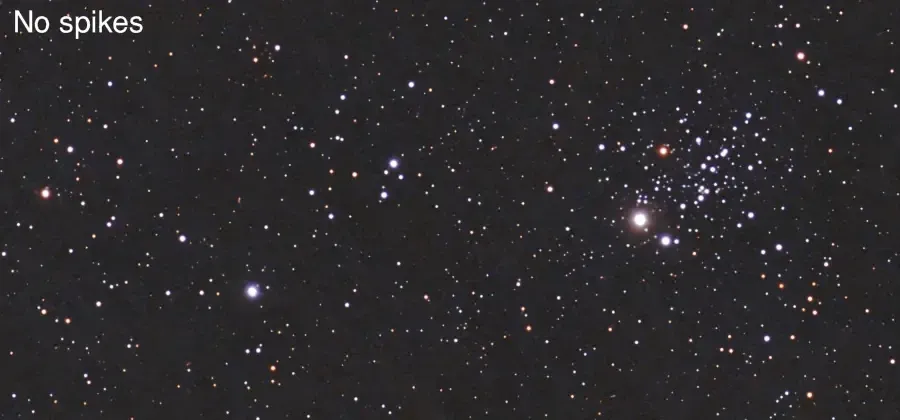
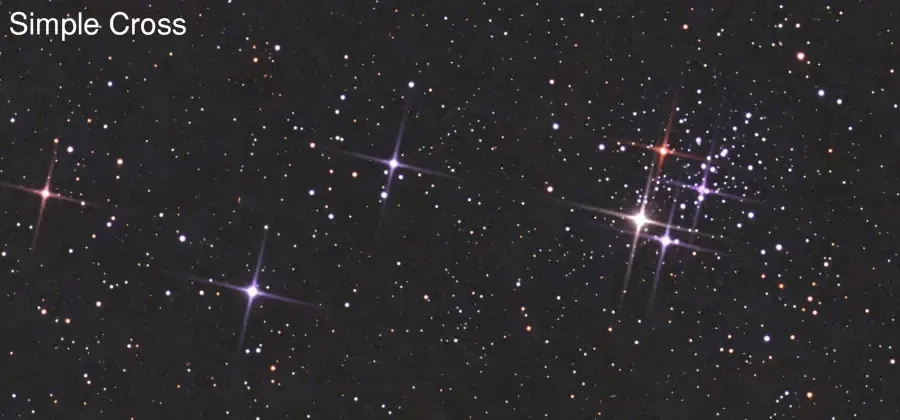
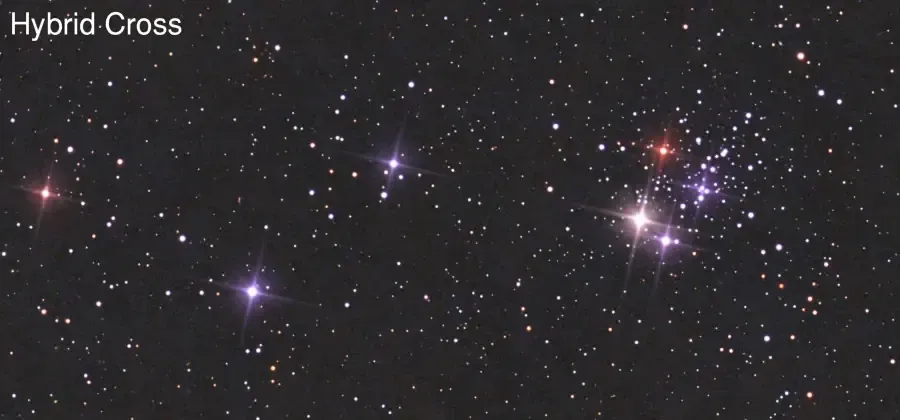
The Dwarf Mini manual hasn’t yet been updated to describe the “Star spikes” feature, so here’s what the various options do. The target is the Owl Cluster in Cassiopeia, and here it is with no spikes. It’s not a good image as the haze has smeared out the stars, but it’ll do for this demonstration. I used Stellar Studio’s “Auto” and “Star reduction” settings as the base for all these images; click one for a bigger version, and use the left/right arrows to cycle between them:
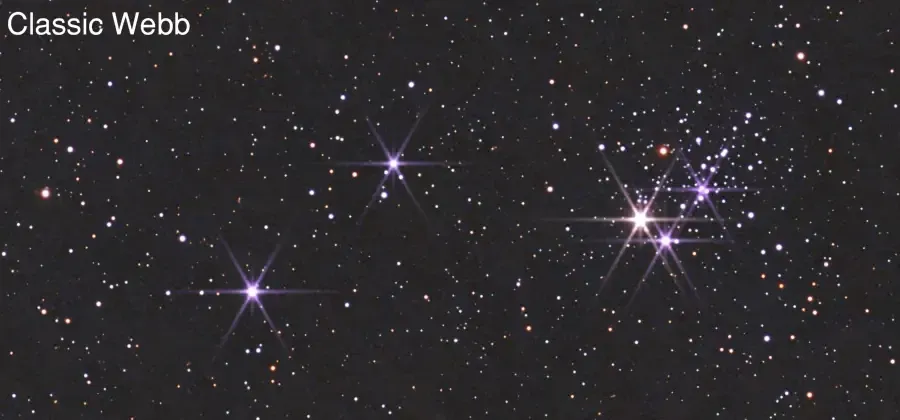
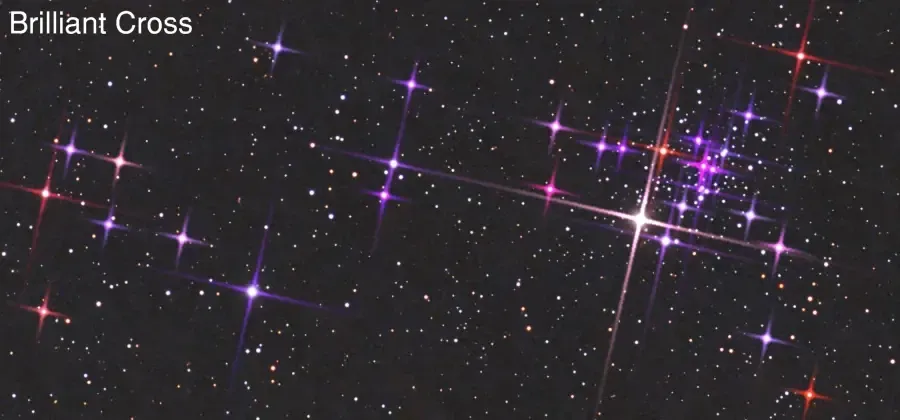
They really did go to town with that last one, didn’t they?
You’ll often see spikes around stars in astronomical images. They’re actually an artefact of the optical system being used, usually a telescope. Many scopes have internal secondary mirrors to redirect the light, and diffraction around the supporting struts gives rise to ’spikes’ around point sources of light. Most scopes have three or four struts, while the James Webb space telescope has six — hence the fourth image.
The Dwarf Mini doesn’t have a secondary mirror with supports so these spikes are ‘fake’, and added in software. But they can make a more pleasing and aesthetic image … if used in moderation. I think the Hybrid Cross is perhaps the nicest one.
It would be nice to have some control over the spikes: angle, number, extent, brightness triggering factor. Perhaps in a future update…
And so to bed…